
The Vanishing Joy of Reading and Writing for Pleasure: A Growing Literacy Concern in American Classrooms


How will the next generation engage with language?
Across the United States, educators are witnessing a quiet but troubling shift: children are reading and writing for pleasure far less than they once did. The decline of these voluntary, self-motivated literacy activities—once a cornerstone of childhood learning and imagination—is now contributing to measurable drops in reading proficiency, handwriting skills, and writing ability. For teachers and parents alike, this trend raises serious questions about how the next generation will engage with language, learning, and thought.
Reading for Fun Is Becoming Rare
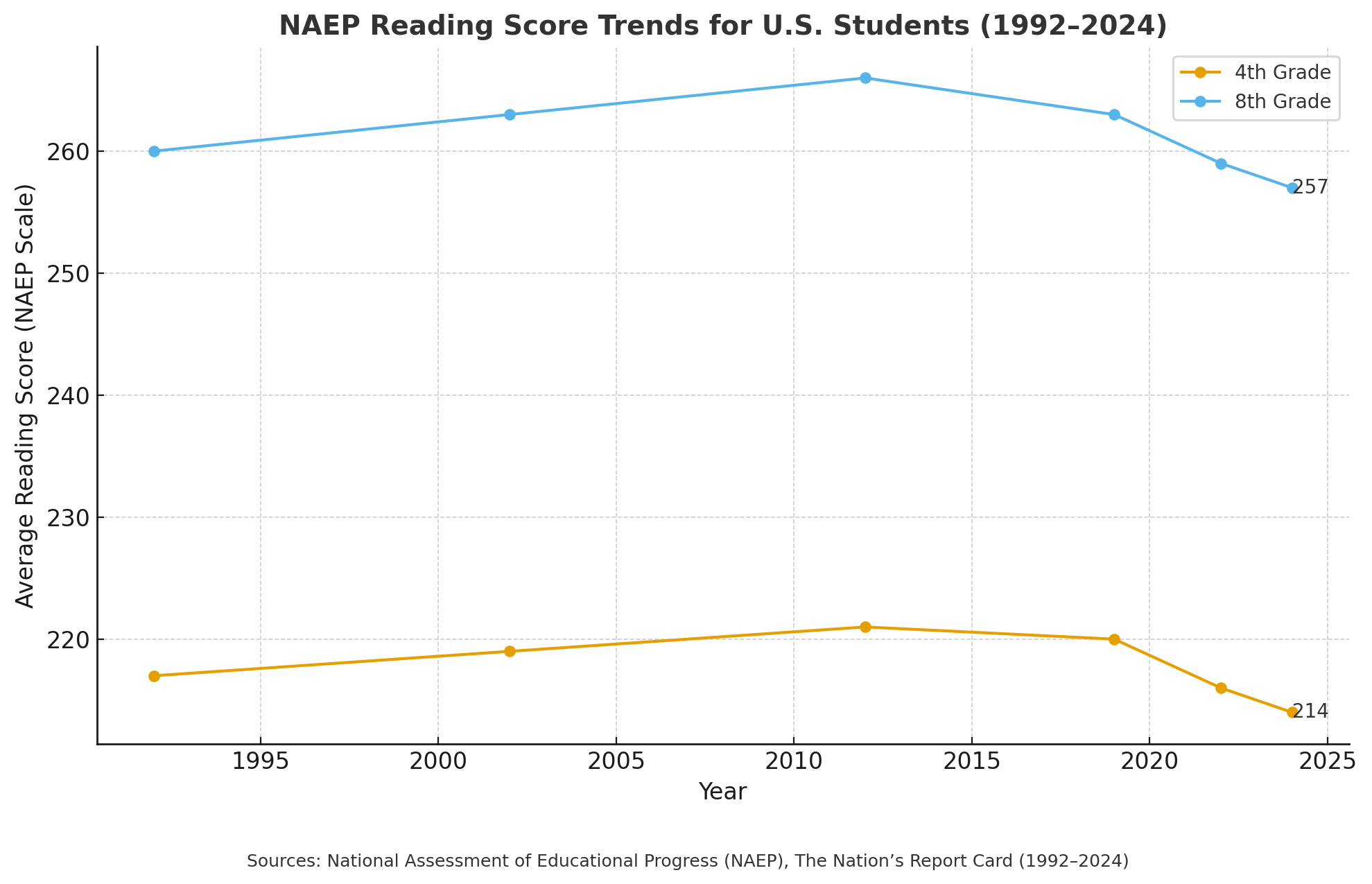
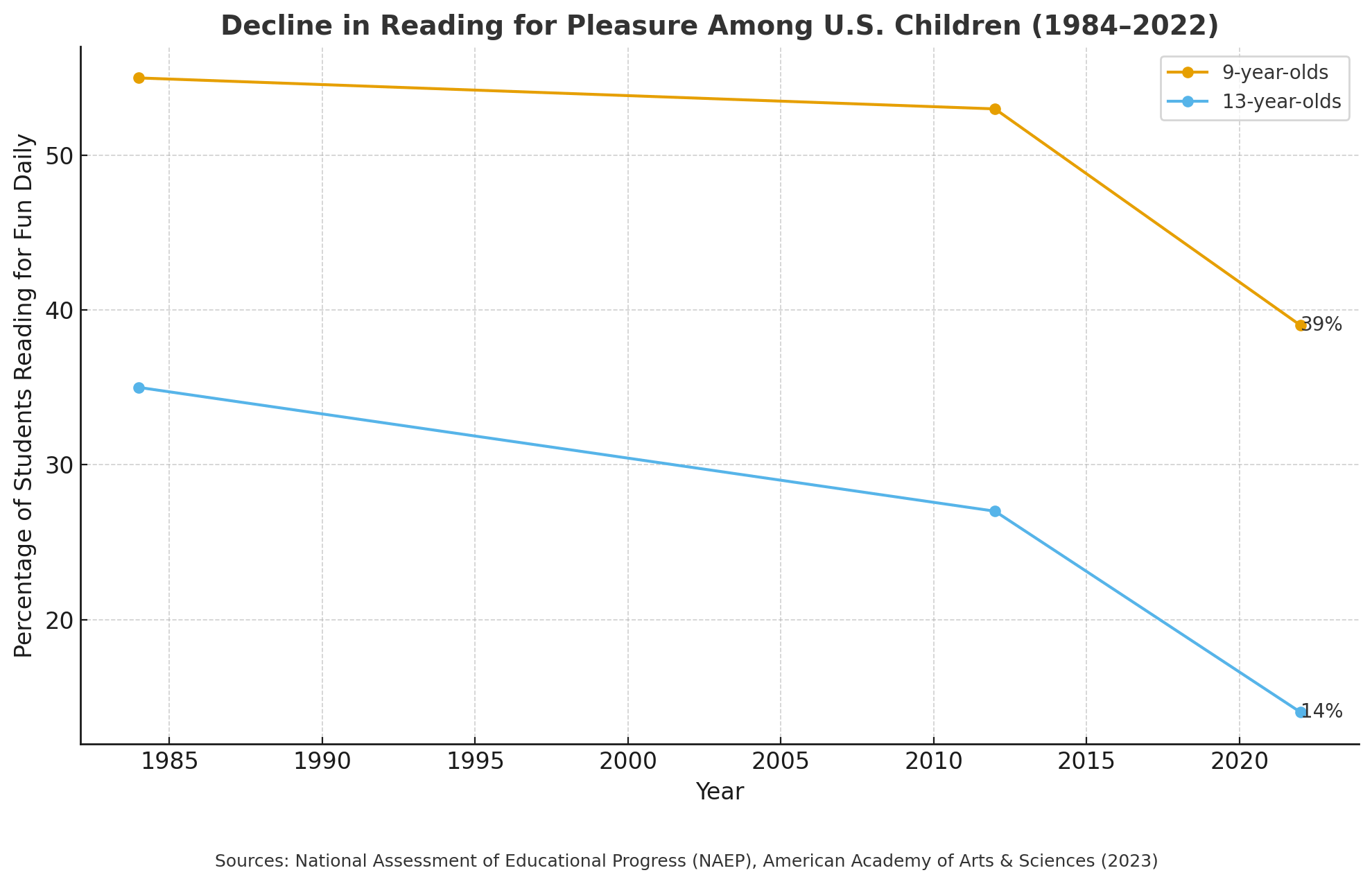
The National Assessment of Educational Progress (NAEP) has reported that U.S. reading scores among fourth and eighth graders have fallen to their lowest levels in decades. Alongside this decline, the number of children who read for fun has dropped sharply. According to the American Psychological Association, fewer than one in five children now read daily for enjoyment—a stark contrast to past generations.
Digital distractions are one major factor. Today’s children are immersed in short-form video content, online gaming, and social media—all of which provide instant stimulation but little opportunity for reflection or sustained focus. As attention spans shorten, fewer students experience the deep engagement and satisfaction that come from losing themselves in a good book.
The Decline of Personal Writing
Reading isn’t the only casualty. The habit of writing for pleasure—through stories, diaries, or creative essays—has also diminished. While children technically write more than ever in digital spaces, much of that writing is fragmentary and image-based. Texts and captions have replaced paragraphs and pages.
Educators report that students increasingly struggle to organize thoughts, develop arguments, or sustain a written narrative. Many lack confidence in grammar, sentence structure, and vocabulary. The problem is not a lack of intelligence or imagination—it’s the erosion of consistent, meaningful writing practice that builds those skills over time.
Handwriting: A Fading Art and Life Skill with Cognitive Consequences
Alongside the decline in voluntary reading and writing is another quiet casualty: handwriting. As classrooms and homes increasingly rely on keyboards, tablets, and touchscreens, fewer children are developing strong handwriting skills. Many schools have reduced or even eliminated cursive instruction, assuming typing skills to be a more practical focus for the digital age.
However, research continues to show that the physical act of handwriting—especially cursive—plays a vital role in literacy development. Writing by hand engages more areas of the brain than typing does, enhancing memory retention, comprehension, and fine motor coordination. When children write letters and words manually, they form deeper connections to language and spelling patterns.
Teachers often note that students who rely heavily on typing tend to rush their thoughts, producing more superficial writing. By contrast, handwriting slows the process, encouraging reflection and intentional word choice. Moreover, legible handwriting remains a life skill that influences academic performance and personal confidence, especially in early education.
Solution Spotlight
Education Publisher, Learning Without Tears (LWT), has an approach to bring back the joy and imagination in reading and handwriting with a multimodal and multisensory approach.
This system involves components and strategies that create a dynamic and effective learning environment. By incorporating tactile, visual, auditory, and kinesthetic activities, LWT’s programs ensure that every child can engage in a way that suits their learning style. This comprehensive approach not only enriches the reading and handwriting experience but also reinforces broader literacy skills, highlighting the crucial role of multimodal learning in educational success.
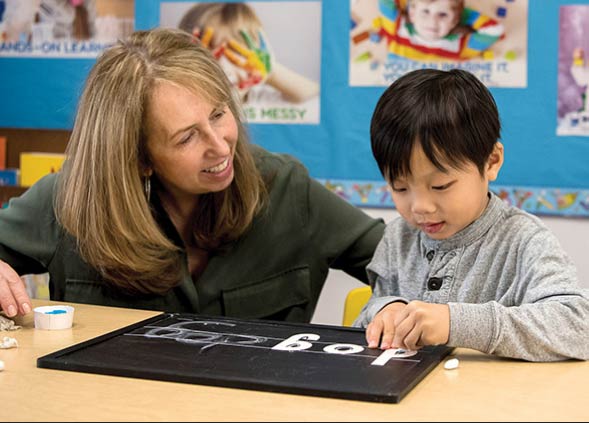
“Since introducing LWT’s multisensory handwriting program, Handwriting Without Tears, my students are more engaged than ever. When they can see, hear, and physically interact with the lesson, the concepts finally ‘stick’—it’s transformed how they connect with reading and handwriting.”
— Ms. Laura B., 1st Grade Teacher, Manassas, VA
From Pre-K through Elementary school, LWT’s multimodal-multisensory strategy integrated play-based learning, songs, and other engaging methods to encourage participation and bring joy into the classroom.
The Ripple Effect on Literacy and Learning
Reading and writing for pleasure do far more than strengthen language skills. They cultivate curiosity, empathy, and critical thinking. When students read voluntarily, they encounter diverse ideas, perspectives, and voices. When they write creatively—by hand or digitally—they learn to clarify their thinking, explore emotions, and build communication skills essential for academic and personal success.
Without these experiences, students’ literacy growth stagnates. The effects ripple across subjects—impacting comprehension in science and history, diminishing analytical reasoning in mathematics, and weakening overall academic confidence.
Rekindling the Love of Words
Reversing this trend requires a collective effort among educators, parents, and communities. Schools can integrate choice reading programs that empower students to select books aligned with their interests, from graphic novels to fantasy series. Classroom environments that celebrate storytelling, journaling, and book discussions can help reestablish the intrinsic joy of literacy.
Handwriting instruction should also be re-emphasized, not as an outdated skill but as a foundational one—complementary to typing and digital communication. Encouraging students to maintain a daily journal, write letters, or take handwritten notes can reinforce both language mastery and cognitive development.
Reimagining Literacy for a Digital Generation
The goal is not to reject technology but to balance it. By weaving reading, writing, and handwriting into the digital lives of young people—through e-readers, creative writing apps, and hybrid literacy projects—educators can meet students where they are while preserving the essence of literacy.
Ultimately, the decline of reading, writing, and handwriting for pleasure is not just an educational issue—it’s a cultural one. Encouraging children to reconnect with the written word in all its forms is an investment in their ability to think critically, communicate clearly, and connect meaningfully with the world around them. Restoring that balance may be one of the most important educational challenges—and opportunities—of our time.




Responses